
Robotic Total Shoulder Replacement

What is robotic shoulder replacement?
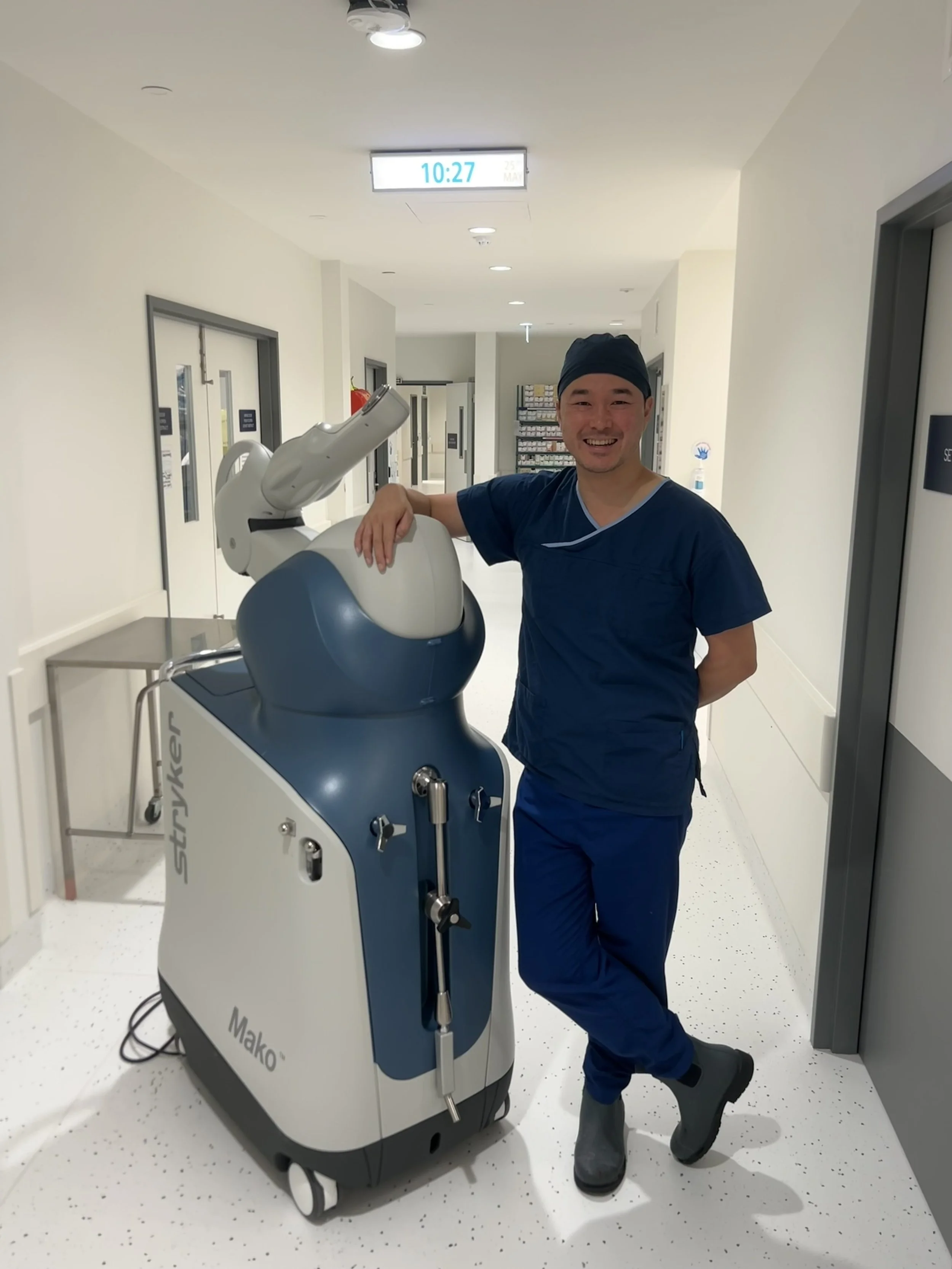
Robotic-arm assisted shoulder replacement combines detailed 3D surgical planning with robotic-arm technology. Robotic-arm assistance has been used in hip and knee replacement surgery for a number of years, and has now been developed specifically for shoulder replacement.
Before surgery, a CT scan of your shoulder is used to create a detailed three-dimensional model. Mr Lau uses 3D planning software to assess your individual anatomy and to plan the size, position and orientation of the shoulder replacement components before the operation begins. During surgery, the robotic system helps Mr Lau carry out this plan accurately.
Robotic assistance does not change the fundamental principles of shoulder replacement. Instead, it gives Mr Lau an additional tool to help plan and perform some of the most technically demanding steps of the procedure.
Robotic-arm assisted shoulder replacement has only recently become available in Australia, and Mr Lau was among the first handful of surgeons in Victoria to use this technology for his patients.
Does Mr Lau or the robot perform the operation?
Mr Lau performs the operation. The robot does not operate independently.
This is an important distinction. The robotic arm is best thought of as a sophisticated surgical tool that remains under the surgeon’s control throughout the procedure. It does not make decisions or perform the shoulder replacement by itself. Mr Lau plans the procedure, exposes the shoulder, prepares the joint and places the implants himself, and all of the important decisions during the operation are his.
The process begins before surgery. Your CT scan is converted into a detailed 3D model of your shoulder, which Mr Lau uses to plan the replacement for your anatomy, including the intended position and orientation of the implant.
During the operation, the system matches this virtual plan to your actual anatomy. Mr Lau controls the robotic arm and uses it to prepare the bone for the implant. As he guides the instrument, the system keeps it within the boundaries set by the surgical plan, which is designed to help avoid removing more bone than planned.
In simple terms, the surgeon provides the judgement and performs the surgery, and the robot provides an additional level of guidance. Mr Lau assesses the shoulder throughout the procedure and can modify the plan when needed.
What are the potential benefits?
One of the most technically important parts of a reverse shoulder replacement is accurate preparation of the glenoid, the socket side of the shoulder joint. The glenoid can be relatively small, may have been altered by arthritis and bone loss, and sits close to important structures. The position and orientation of the implant therefore need to be planned carefully.
Robotic-arm assistance allows Mr Lau to plan the operation in three dimensions before surgery, then use robotic guidance to help reproduce that plan in theatre. Potential advantages include:
Personalised surgical planning: the operation is planned from a 3D model of your own shoulder, created from your CT scan, rather than a standard approach for every shoulder.
Accuracy: robotic guidance can help the surgeon reproduce the planned position and orientation of the shoulder replacement.
Controlled bone preparation: virtual boundaries help guide the surgeon while preparing the glenoid.
Implant positioning: accurate positioning is particularly important in reverse shoulder replacement, where relatively small changes in implant position can affect how the reconstructed shoulder works.
Are there any limitations?
Robotic assistance does not remove the risks of shoulder replacement surgery. Mr Lau will discuss these with you before your operation, including any that are specific to the robotic technique.
Because robotic-arm assistance is new to shoulder replacement, evidence on long-term results is still emerging. What it offers is a way to plan your operation in detail and to help reproduce that plan accurately during surgery.
Is robotic shoulder replacement right for me?
For suitable patients, robotic-arm assisted shoulder replacement combines the experience and judgement of a specialist shoulder surgeon with detailed 3D planning and robotic guidance, for a shoulder replacement personalised to your anatomy.
Not every patient is suitable. Whether it is the right option for you depends on your shoulder, your anatomy and the type of replacement you need, and Mr Lau will talk you through your options at your consultation.
Related: Reverse total shoulder replacement – patient information · Rehabilitation protocol